Posts

Showing posts with the label shiva

Pranayama - Ancient breathing techniques in Yoga

Image
Pranayama - Ancient breathing techniques in Yoga Yogi Kamal Ji doing Pranayama & Meditation at Mouni Baba Cave on the way to Neelkanth (Lord Shiva) Temple  Hatha yoga is much more. It extends well beyond being a sophisticated physical exercise system and integrates ideas of ethics, diet, cleansing, pranayama (breathing exercises), meditation and a system for the spiritual development of the yogi. Proper diet: The Hatha yoga texts place major emphasis on 'mitahara', which connotes "measured diet" or "moderate eating". Several Hatha Yoga texts like 'Hatha Yoga Pradipika', 'Gheranda Samhita' and 'Shiva Samhita' includes 'mitahara' as an essential part of a Hatha yoga holistic practice. According to Hatha Yoga Pradipika, verse 1.57, "A Brahmachari, practicing 'mitahara' (moderate diet) and 'tyaga' (renunciation, solitude), devoted to yoga achieves success in his inquiry and effort within half a ...
Yoga History - Origin of Yoga

Image
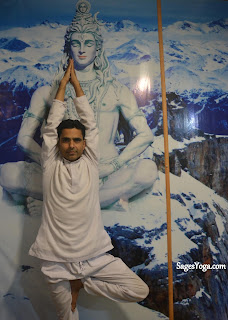
Yoga History - Origin of Yoga Yoga, today, is the fastest-growing practice worldwide. But how much do we know about the origin of Yoga? Not very much, I guess. So let us just get the basic knowledge about it in this article. Yoga is said to be originated in Indus Valley Civilization (3300-1900 BCE) and Vedic-Period (1500-500 BCE). The word 'Yoga' is first mentioned in the Rigveda. The Rigveda, however, does not describe yoga, and there is little evidence as to what the practices were. Earliest references to practices that later became part of Yoga are made in 'Brihadaranyaka Upanishad', the earliest Hindu Upanishad. For example, the practice of 'Pranayama' (consciously regulating breath) is mentioned in hymn 1.5.23 of Brihadaranyaka Upanishad (c. 900 BCE) , and the practice of 'Pratyahara' (concentrating all of one's senses on self) is mentioned in hymn 8.15 of 'Chandogya Upanishad' (c. 800–700 BCE). The first known appe...